A Metal Born From Stars
Gold did not originate on Earth. Scientists believe it was forged in the collision of neutron stars billions of years ago, scattered across the cosmos, and eventually drawn into our planet during its formation. There is something profound in that — the ring on your finger carries within it the memory of a cosmic event older than the solar system itself.
For the artisans at Mila Gold & Diamonds, this is not merely poetic. It is the foundation of how they approach every piece. Gold is not a raw material to be shaped and sold. It is a legacy material — one that demands reverence, patience, and an almost meditative attention to craft.
The Karatage Question
Not all gold is created equal, and understanding karatage is the first step to understanding value. Pure gold — 24 karat — is too soft for most jewellery. It bends, scratches, and loses its form. The goldsmith's art lies in finding the perfect alloy: enough gold to retain its warmth and luminosity, enough strength to hold a diamond in place for generations.
At Mila, the 22 karat pieces in the Hiranmaya collection represent the peak of this balance. The gold is rich, deeply coloured, and carries the kind of weight that you feel the moment you hold it. It does not feel like fashion. It feels like inheritance.
The Hands That Shape It
Walk through the workshop early in the morning and the first thing you notice is the silence. Not absence of sound — there is the soft tap of a hammer, the breath of a torch — but an absence of noise. Every movement is deliberate. Every artisan knows that a single careless moment can undo hours of work.
The senior craftsmen at Mila have spent decades perfecting techniques that have not changed in centuries: lost-wax casting, hand engraving, stone setting by eye rather than instrument. They will tell you that the best tools are always your fingers. You feel the piece before you see it. You know when something is right before you can explain why.
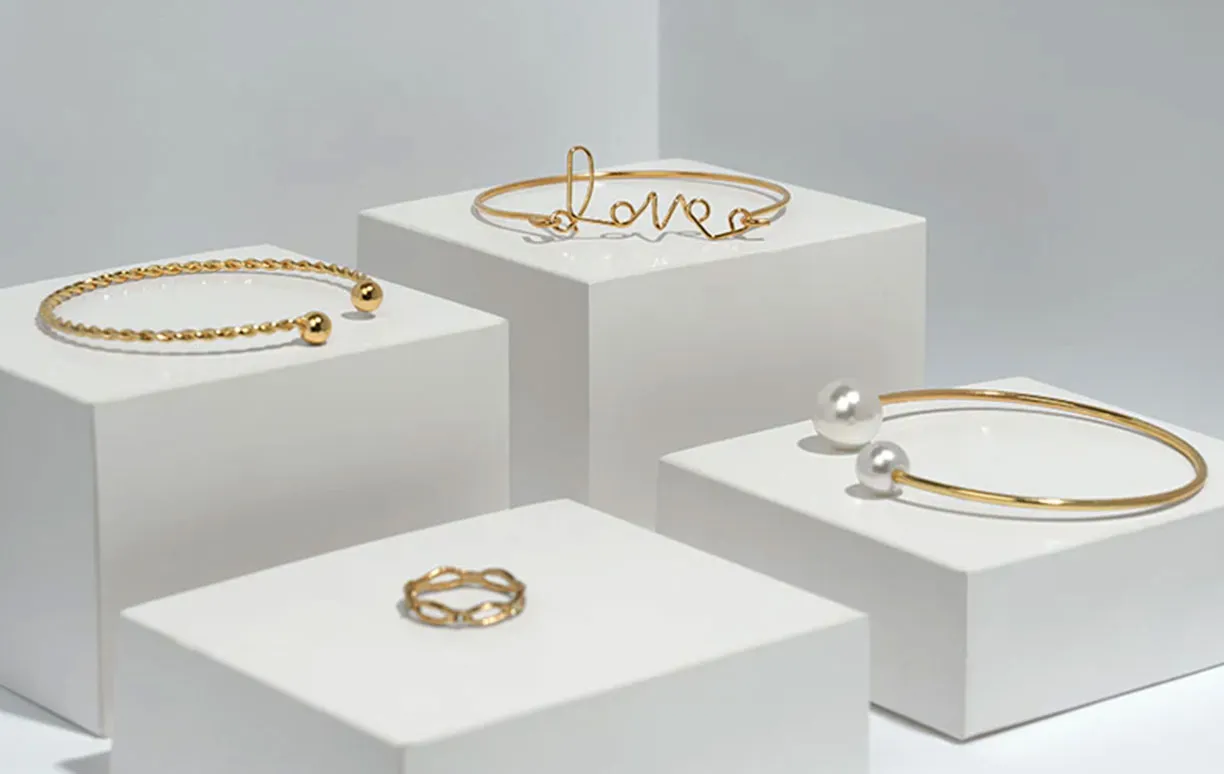
Gold does not age. It does not corrode, fade, or diminish. The bracelet your grandmother wore on her wedding day is, molecularly, identical to the one you wear today.
This is what draws people back to gold, generation after generation. Not the shimmer — though that matters. But the permanence. In a world of fast everything, gold remains stubbornly, gloriously slow.